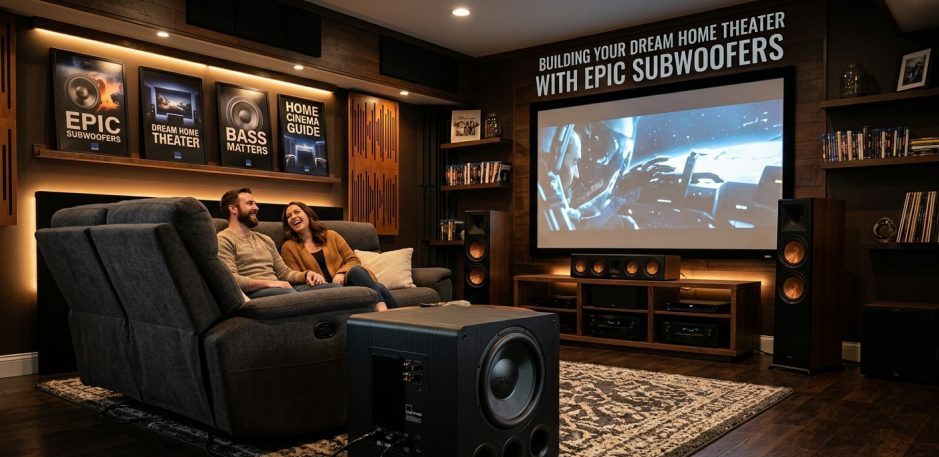
Placing a subwoofer in a compact living room, bedroom, or home studio can feel like an uphill battle. In smaller spaces, low-frequency sound waves behave unpredictably. Instead of deep, punchy bass, you might experience muddy audio, annoying rattles, or awkward “dead zones” where the bass completely disappears.
Optimizing your bass response doesn’t require buying expensive acoustic panels right away. Often, achieving cinematic sound or immersive music comes down to proper subwoofer placement.
Smart subwoofer placement layout for compact spaces. Source: ZernLiew / Getty Images
Why Small Rooms Are Tough on Bass
Low-frequency sound waves are physically long. In a small room, these waves can easily be longer than the dimensions of the room itself. This causes sound waves to bounce off walls, floors, and ceilings, creating standing waves (or room modes).
These standing waves cause certain bass frequencies to boost excessively (boomy sound) while others cancel each other out. To combat this, you need strategic placement techniques tailored to tight spaces.
Best Subwoofer Placement Strategies for Small Rooms
1. The Corner Advantage (With Caution)
Placing your subwoofer in a room corner is the classic approach. Corners naturally amplify low frequencies because the walls act as acoustic horns.
- The Benefit: Maximum output and efficiency, meaning your subwoofer doesn’t have to work as hard.
- The Catch: In a very small room, corners can cause the bass to become overly boomy or muddy. If it sounds too thick, pull the subwoofer a few inches away from the walls.
2. The Front Soundstage (Next to the TV Stand)
For home theaters and media setups, placing the subwoofer near the front left or right speaker—typically flanking your TV console—is standard practice.
- The Benefit: It keeps the audio imaging cohesive, blending the low frequencies seamlessly with your front speakers.
- Tip: Avoid pushing it tightly into an enclosed cabinet; subwoofers need breathing room to project sound cleanly without rattling your furniture.
3. The Subwoofer Crawl (The Pro Method)
If you want absolute perfection, use the famous “Subwoofer Crawl” method:
- Place your subwoofer temporarily in your main listening chair or couch.
- Play a bass-heavy track or pink noise generator.
- Crawl around the perimeter of the room on your hands and knees.
- Listen closely to where the bass sounds tightest, deepest, and most defined.
- Place your subwoofer permanently right where your ears just found that sweet spot!
An optimized home audio environment. Source: archideaphoto / Getty Images
Quick Tips to Improve Bass in Compact Spaces
- Decouple the Subwoofer: If you live in an apartment or share walls, place an isolation pad or rubber feet under your subwoofer. This stops floor vibrations from traveling through the building structure.
- Mind the Crossover: Set your AV receiver or amplifier crossover correctly (usually around 80Hz) so smaller speakers don’t overlap with the subwoofer’s workload.
- Acoustic Treatment: Bass traps placed in room corners can absorb excess low-frequency reflections if your room has too many hard, parallel surfaces.